
Meaninglessness, Manipulation, and Radicalization
A fundamental mistake frequently made in explaining radical religious movements, manipulated masses, and persistent economic collapses in the Middle East is reducing the problem to the individual level. Explanations such as culture, consciousness, morality, or social backwardness are not only analytically inadequate but also politically dysfunctional; because such approaches push the state, power, and political responsibility outside the realm of discussion. However, when we look at the issue from a Neorealist perspective, the phenomenon called radicalization is not an individual deviation or ideological extremism, but a rational consequence of a power and sovereignty vacuum.
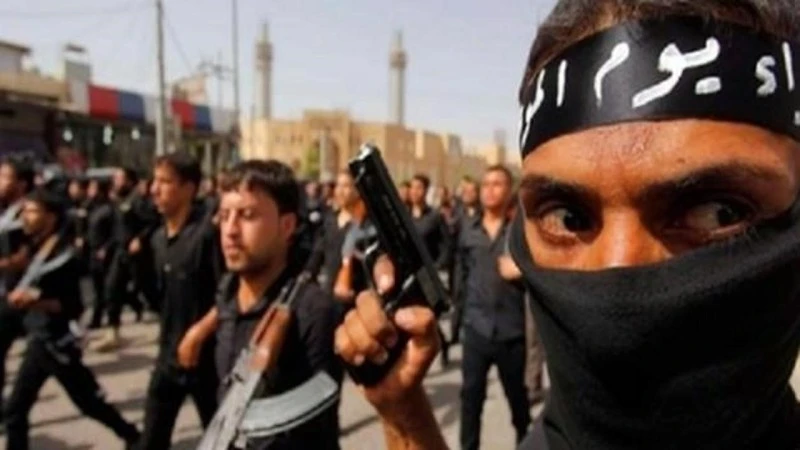
In this context, the issue is more related to the capacity of the state than to the nature of society. The assumption that the international system is anarchic is a fundamental argument of Neorealism. However, this anarchy is not limited to the interstate level. When the state weakens or withdraws its sovereignty in domestic politics, a similar anarchic structure infiltrates the country as well. At this point, the neorealist logic is clear and unambiguous: if there is a power vacuum, it will inevitably be filled by a new actor. Radical religious organizations, in this context, are not irrational or pathological structures; they are alternative attempts at authority that emerge in areas where the state has withdrawn. To explain radicalization here through a crisis of meaning or identity crisis would be to confine the problem to a psychological and cultural ground. However, what is essentially at stake is the withdrawal of sovereignty. When the modern state ceases to monopolize justice, control the legitimate use of violence, and make the future predictable, a fertile ground for radicalization is created. When the state effectively sends the message to its citizens, "living is your responsibility, but order is mine," sovereignty disintegrates at this point. This disintegration is not only administrative but also a dissolution based on legitimacy. Structures like ISIS and Daesh emerge at this stage. These organizations primarily offer a promise of order, not a belief system. The nature of the structures they establish clearly demonstrates this. As can be seen, they establish courts, collect taxes, impose penalties, and draw geographical boundaries. Therefore, these structures should be considered not merely as terrorist organizations, but rather as micro-state initiatives. Establishing justice is certainly important at this stage, but justice is not only a moral ideal, but also a guarantee of political stability. A state begins to lose its legitimacy when the prevailing opinion in a society reaches the point of: "Laws protect the powerful." With the establishment of this perception, two parallel processes occur. The rule of law weakens. The norms of illegitimate actors strengthen. At this stage, radical groups are accepted not because they are just, but because the perception that the state is no longer just has deepened. This situation is more related to the state's capacity for deterrence and order than to societal virtue. And ultimately, the economy suffers. At this stage, the most devastating consequence of economic collapse is not hunger or loss of income. The truly devastating effect is the unpredictability of the future. When the future is unpredictable, long-term loyalty weakens, adherence to the law decreases, and investment in the state ceases to be rational. In such an atmosphere, individuals always behave rationally. In other words, they begin to focus on short-term gains, gravitate towards whoever holds power, and exhibit behaviors that prioritize saving the present. The sacred future narrative offered by radical organizations fits precisely into this rational void. The most critical question here is: Why has the state effectively lost its monopoly on violence? Increased security measures, before the answer to this question is clear, will only deepen the state's legitimacy crisis. At this point, the state's primary task is not to persuade society, but to re-establish its sovereignty. In this context, for the state to maintain its sovereignty and ensure stability in society, it needs to re-centralize sovereignty, consolidate the justice mechanism in a single hand, and make the future predictable. Once all these conditions are met, it is critical for the state to produce a shared ideal.
In short, radicalized groups, manipulated masses, or collapsing economies are not societal problems; rather, they are a consequence of the state's lack of capacity.
People do not try to take difficult or closed paths; on the contrary, they prefer whichever path is open and accessible. If we are discussing today who used those roads and how, the real question to ask is: Why did the state lose the power to close those roads?